According to the latest severe typhoon warning from the provincial meteorological observatory, Typhoon “Hongxia” this year is accelerating with violent winds, torrential rain, and strong convective cloud clusters, about to make a strong landfall in coastal areas. Meteorological forecasts show that Typhoon “Hongxia” not only has low central pressure and strong wind gusts, but will also bring long-duration, intense local rainstorms to heavy rainstorms, which can easily trigger severe surface waterlogging, seawater intrusion, and urban flooding. For physical manufacturing factories, small and micro processing workshops, and wholesale marketplace stalls, every frontal strike by an extreme typhoon is a test of an enterprise’s emergency response capabilities and asset protection levels. Unlike asset-light industries such as the internet or finance, the workshops and warehouses of physical light industries store large quantities of raw cotton yarns, heat-set webbing, zipper long chains, and metal hardware accessories, while running high-precision shuttleless looms, electronic jacquard heads, and injection molding machinery. An inch of water seepage or a blown-off corner of a roof damages not only materials and equipment purchased with real capital, but can also directly disrupt subsequent production schedules and delivery dates. Facing the approach of Typhoon “Hongxia”, physical industry personnel must not hold any fluke mindsets. Only by translating warnings into action and eliminating hazards before wind and rain arrive can a dual defense line for assets and life be solidly built under extreme weather.
I. Warehouse and Material Protection Tactics: Ring Drainage Defense Line and Elevation Above Ground
Light industrial accessories and textile raw yarns are extremely sensitive to environmental humidity. Once synthetic filament yarns and cotton yarns become damp, they easily develop mildew and color variances; water immersion of cardboard packaging leads to collapse and damage; precision zinc alloy buckles easily undergo surface oxidation and blackening in damp air. Facing the heavy rainfall brought by Typhoon “Hongxia”, warehouse flood prevention must adopt a protective tactic of “source diversion, ground isolation, and high-level relocation”:
1. Comprehensive Elevation of Materials above Ground and Three-Zone Demarcation: Thoroughly abandon the habit of placing materials directly against the ground or wall. Raw yarn spools, finished webbing rolls, zipper long chains, and hardware accessory boxes inside the warehouse must be faithfully raised onto wooden pallets or plastic pallets, keeping an elevation height of no less than 20 cm from the floor and at least 15 cm away from walls. For vulnerable, high-value materials located in basements, semi-basement warehouses, or low-lying areas, they should be relocated to dry upper floors prior to typhoon landfall.
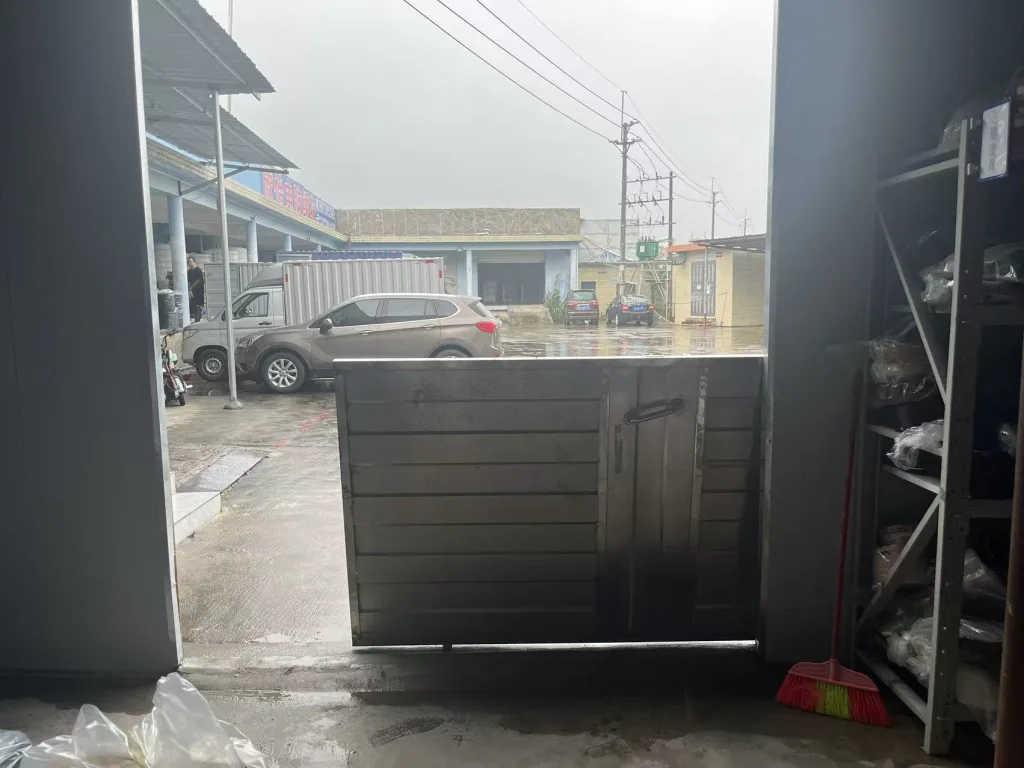
2. Setting Drainage Ditches around Factory Buildings and Clearing Open Channels: Establish comprehensive defenses along the outer perimeter of factory buildings and warehouses, scientifically planning and digging ring drainage ditches and sand traps. Focus on clearing waste yarn ends, packaging plastics, leaves, and silt debris inside ditches to keep the surrounding drainage network completely unobstructed. Ensure that during short-term heavy rainfall, accumulated water can be smoothly discharged out of the factory area at the first opportunity, severing the hazard of water backflowing into workshops from the source. At low-lying main entrances, simultaneously equip flood baffle boards and sandbags for secondary reinforcement.
3. Pre-Inspection of Color Steel Tiles and Roof Leakage: Color steel tile roofs of older factory buildings and temporary facilities are weak links for wind and rain resistance. Professionals should be arranged in advance to climb the roof, tighten loose fastening screws, and apply waterproof silicone sealant to cracked drilled holes and seams. Focus on inspecting drainage gutters on workshop roofs, clearing accumulated leaves and debris to prevent gutter overflow from flooding into workshops.
II. Windproofing and Anti-Toppling Reinforcement for Workshop Equipment and High-Altitude Components
Strong wind gusts near the center of Typhoon “Hongxia” possess immense destructive power. Once outdoor hanging facilities, high-altitude air ducts, and workshop doors or windows are torn apart by gale-force winds, the strong winds invading indoors will generate immense uplift effects, triggering chain-reaction damage.
1. Firm Fastening of Doors and Windows and Internal Negative Pressure Control: During typhoon landfall, all exterior windows, skylights, and non-emergency safety doors of factory buildings, warehouses, and stalls must be tightly closed and locked. Special attention must be paid: when gales pass, if windward windows burst or open, massive air currents rushing into the workshop without relief will generate strong internal uplift currents, easily blowing color steel tile roofs off completely from the inside. Therefore, never open windward doors or windows at will during high winds.
2. Secondary Wire-Rope Reinforcement for High-Altitude Air Ducts and Exhaust Facilities: Many manufacturing workshops have heavy-duty exhaust ducts, industrial exhaust fans, and outdoor air-conditioning units installed on roofs and exterior walls. Before the typhoon arrives, anchor bolts of mounting bases must be inspected one by one, and suspended duct sections should undergo secondary triangular guy-wire anchoring using galvanized steel wire ropes to prevent gusts from snapping ducts and crushing ground facilities.
3. Hazard Avoidance for Wholesale Stalls and Outdoor Billboards: Outdoor awnings, temporary promotional banners, and retractable rain sheds of wholesale stalls must be retracted or completely dismantled in advance. Perform rust-proof welding reinforcement on upright signs and lightbox iron frames; for glass doors and windows that might be struck by strong winds, apply tape in “X” or grid patterns to increase glass toughness and guard against bursting and flying shards.
III. Electrical Safety, Lightning Protection, and Short-Circuit Prevention
Severe weather combining wind, rain, and lightning is a peak period for electrical accidents and equipment failures. Moisture seeping into power distribution cabinets, high-voltage surges from lightning strikes, or short circuits can burn out precision electronic control boards at any time, even endangering personal safety.
1. Equipment Shutdown and Main Power Disconnection: During typhoon landfall or factory holiday wind-evasion periods, except for retaining necessary emergency lighting, flood drainage pumps, and security monitoring power, all production machinery in workshops—including heat-setting machines, high-speed shuttleless looms, zipper tooth-arranging machines, and injection molding machines—must be faithfully shut down with main circuit breakers opened and power plugs unplugged.
2. Elevation of Floor Wiring and Mobile Power Management: Strictly prohibit laying temporary sockets and extension cords directly on the floor. All mobile cables and power strips must be suspended and fixed on pillars or walls at a height of more than 1.5 meters from the floor. For power distribution rooms situated in lower terrain, equip automatic water-level-sensing pumps and install waterproof barrier boards at door frames.
3. Backup Power Supplies and Emergency Material Reserves: Inspect backup generator sets across the factory area and reserve sufficient diesel fuel to ensure continuous operation of flood drainage pumps and basic lighting if municipal power is suddenly cut off. Simultaneously, equip power distribution rooms and emergency duty rooms with flashlights, high-brightness emergency lights, raincoats, and rain boots.
IV. Personnel Safety and Emergency Response Mechanisms
The prime principle of typhoon and flood prevention is “life comes first”. Any property damage can be recovered through subsequent production remedies, but human life is non-replaceable. Physical enterprises must establish clear emergency response mechanisms.
1. Keeping Evacuation Routes and Emergency Exits Completely Unobstructed: The harsher the weather conditions, the more resolutely evacuation routes and emergency exits in factory buildings and warehouses must be guarded. Main evacuation routes must remain 24 hours completely unobstructed with zero material blockage, and emergency doors must remain push-openable at any time. Never lock evacuation doors with goods for wind or rain prevention, ensuring all personnel can evacuate rapidly within milliseconds during emergencies.
2. Nearby Deployment of Firefighting Equipment and Alarm Testing: Fire extinguishers and fire hydrants in workshops and warehouses must be maintained in a ready-for-use state. Ceiling smoke detectors and emergency public address systems should undergo joint testing before weather events to ensure emergency instructions can be clearly communicated to every machine and worker amidst the roar of wind and rain.
3. Responding to Government “Three-Suspension” Directives and Employee Management: Closely monitor local meteorological warning alerts. Once local authorities issue typhoon “three-suspension” directives (suspension of work, business, and classes), factories and stalls should immediately implement work suspension and hazard avoidance arrangements without forcing employees to commute in severe storms. For workers remaining in factory dormitories, inspect dormitory doors, windows, and roof safety, and prepare sufficient supplies of drinking water and dry rations for 2–3 days.
V. Practical Typhoon Safety Operations and Supply Chain Protection at Guangzhou Huayun Manufacturing
As a source factory deeply rooted in the one-stop matching supply chain of webbing, zippers, and luggage accessories for over twenty years, Guangzhou Huayun Manufacturing Co., Ltd. is located in Shiling Town, Huadu District, Guangzhou—the “Leather Goods Capital of China”. Facing the upcoming landfall of Typhoon “Hongxia”, the team at Huayun Manufacturing rapidly launched typhoon and flood emergency response plans, implementing protective measures across every single link on the production site.
Guangzhou Huayun Manufacturing’s production base strictly enforces safety production standards: equipment zones, material zones, and finished product zones in the factory area are categorized and arranged by designated regions; drainage ditches surrounding factory buildings are scientifically set up and thoroughly cleared; all raw yarns, finished webbing, and zipper long chains are 100% elevated off the ground on pallets. The factory is densely equipped nearby with fire extinguishers, fire hydrants, and smart smoke detectors; main factory aisles and emergency exits remain 24 hours completely open and unlocked. For core heat-generating process areas such as heat-setting machines and yarn-passing zones, routinely configured high-power ventilation equipment, exhaust ducts, industrial ceiling fans, and fan networks underwent secondary tightening and wind-resistant guy-wire reinforcement before the typhoon to ensure a stable and safe workshop environment. Huayun people guard the safety bottom line with rigorous dedication, ensuring production order and delivery schedules progress steadily under extreme weather, faithfully safeguarding the order delivery of our merchants!
VI. Conclusion
Although Typhoon “Hongxia” approaches fiercely, as long as physical industry practitioners maintain clarity in mind, preparation in hand, and bottom lines underfoot, we can calmly cope with weather challenges. From the market waves of raw material fluctuations to nature’s meteorological trials, physical manufacturing demonstrates precisely this solid risk-resistant resilience and composure.
Guangzhou Huayun Manufacturing Co., Ltd. sincerely appeals to peers in fabrics and accessories, processing plant partners, and wholesale stall owners: during typhoon passage, please be sure to firmly lock doors and windows, set up and clear drainage ditches around factory buildings, elevate materials off the ground for moisture prevention, cut off dangerous power supplies, and ensure personnel safety. Safely prevent typhoons and earnestly avoid hazards. May everyone smoothly pull through the trial of Typhoon “Hongxia”, jointly welcoming a safe, steady, and prosperous tomorrow for China’s physical smart manufacturing!